THE ISSUE

Wi-Fi calling is already on
your phone. A plan isn't.

Here's what the complaint alleges is standing in the way.
THE NUMBERS
AIRPLANE MODE
Cellular radio off, Wi-Fi back on.
Do calls still connect?
Third Amended Complaint ¶39, p. 10
Yes.
DIGIFONICA
2008
Sold a consumer Wi-Fi calling service on Nokia handsets, from £5.99 a month.
Third Amended Complaint ¶35, p. 8
SHERMAN ACT CLAIMS
4
Tying, restraint of trade, monopolization and predatory pricing. Filed September 4, 2026.
Third Amended Complaint ¶¶205–235, pp. 55–60
THE TECHNOLOGY
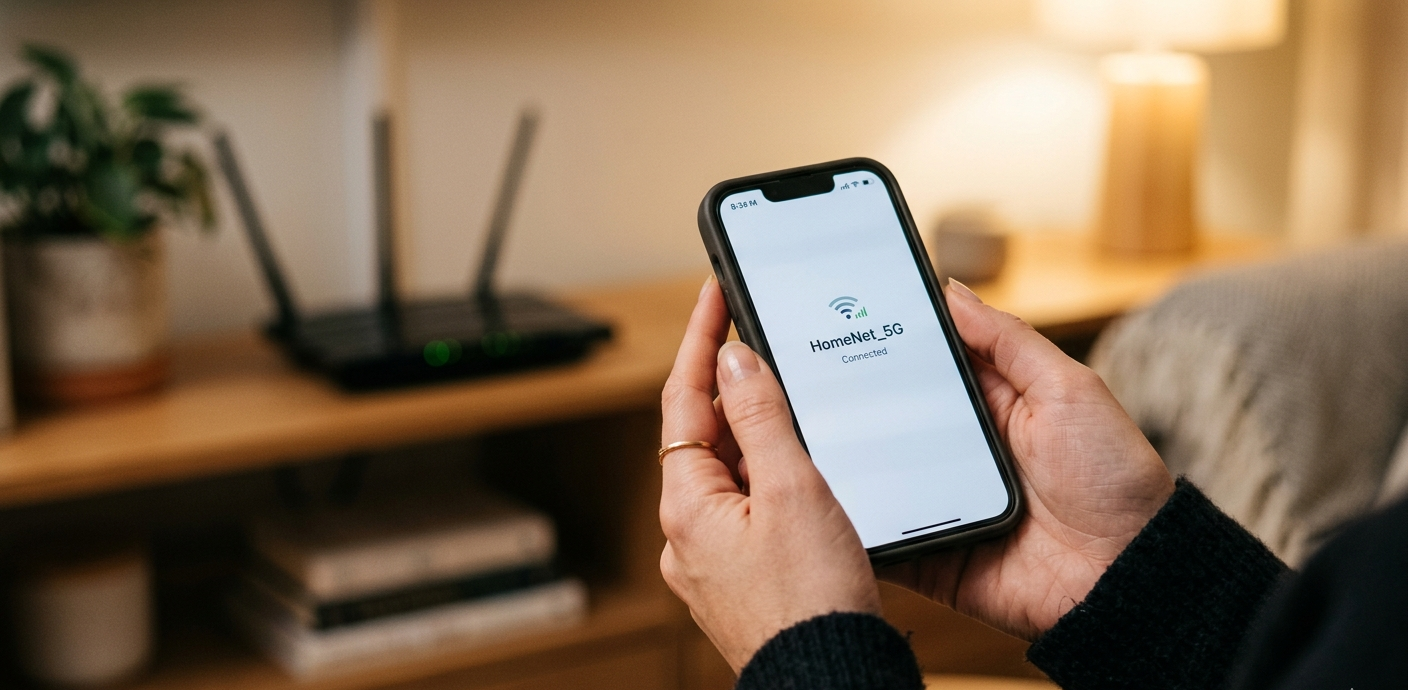
Your phone already does this
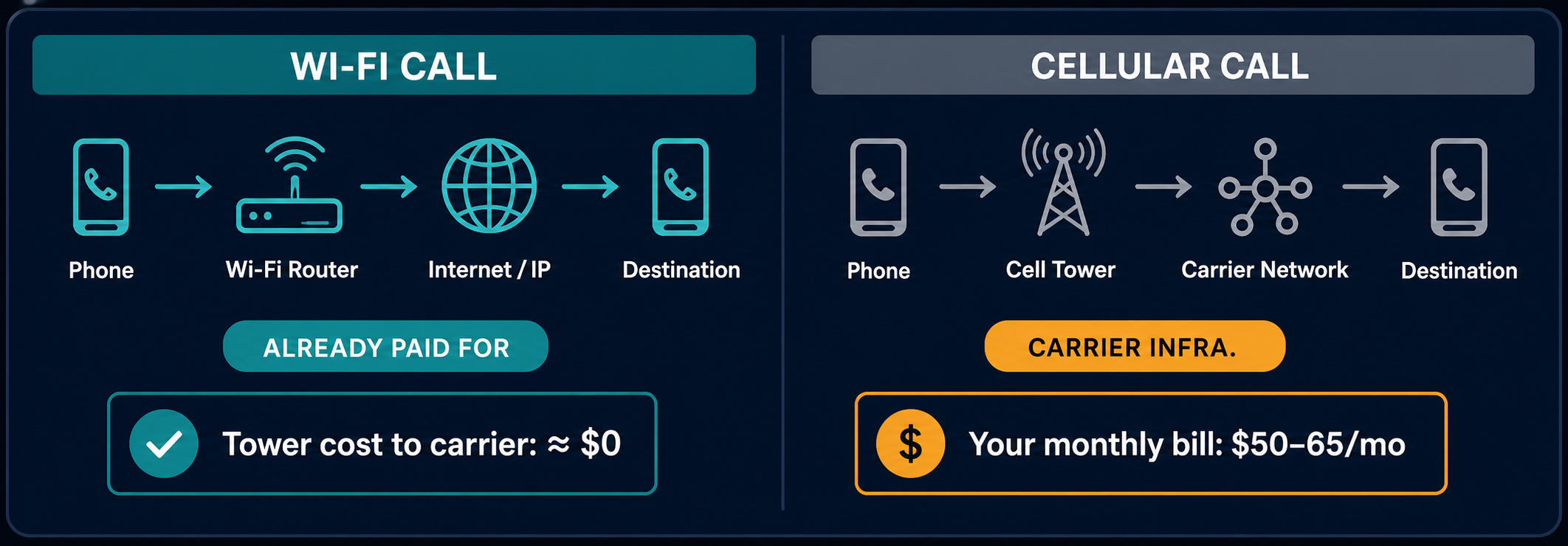
Wi-Fi calling capability is built into most modern smartphones. When cellular signal is weak, the device routes the call over your Wi-Fi network instead. Carriers identify and manage those calls, and they can appear on your bill.

The call reaches the same destination either way. The complaint alleges that what a consumer cannot do is buy that Wi-Fi service on its own, from anyone.
Third Amended Complaint ¶¶3–5, p. 2
THE ORIGIN
The Green Button Promise
THE PROGRAM
In 2014 and 2015 the GSMA, a mobile operator trade association, ran a program called Network 2020. Its purpose was to counter internet-based communications apps by making carrier voice and messaging native to the handset rather than something a consumer downloads. It called for “collaborative action by operators,” and described the Green Button Promise — carrier services behind the familiar phone and message buttons — as something alternative communication suppliers “simply cannot offer.”
THE OBJECTIVE
A February 2015 presentation by the GSMA's Chair of IP Communications, who was also Deutsche Telekom's Head of Voice and Messaging, set out the goal: “retain Telcos as primary communication service provider (not fall-back only)” and “defend ‘Green Buttons’ as service entry points in an IP world.”
The complaint identifies AT&T, Verizon and Deutsche Telekom — then T-Mobile US's controlling stockholder — among the program's leading operators.
Third Amended Complaint ¶¶121–124, pp. 34–36
THE BARRIER
The Lock and the Key
🔒 THE LOCK
The platform and device makers — Apple, Google, Samsung — control the operating system functions that recognize a service as native telephony: the default dialer, background call receiving, integrated emergency calling and call history.
🔑 THE KEY
The carrier controls the subscriber state that unlocks those functions: eligibility, entitlement, provisioning, authorization and activation.
Neither one alone produces native Wi-Fi Calling. The complaint alleges an independent provider has no ordinary pathway to the key, so the lock stays closed.
Third Amended Complaint ¶65, p. 17 · ¶68, p. 18
THE MARKET
Three carriers, three separate locks
AT&T
Controls AT&T authorization
for native Wi-Fi Calling
Verizon
Controls Verizon authorization
for native Wi-Fi Calling
T-Mobile
Controls T-Mobile authorization
for native Wi-Fi Calling
No carrier can provide another's authorization, and no independent provider can obtain any of them. The complaint alleges each carrier therefore holds exclusive control over native Wi-Fi Calling for its own subscribers, who face real costs to switch: unpaid device balances, lost promotional credits, device compatibility limits and family plan consequences. Third Amended Complaint ¶11, p. 3 · ¶¶52–55, p. 14
COMMON QUESTIONS
Still have questions?

Yes — provided by your carrier, as part of your cellular subscription. What the complaint alleges does not exist is a Wi-Fi-primary service you can buy from an independent provider: one that works as your ordinary primary line, uses your regular number, rings normally, appears in your call history and handles emergency calling, without also requiring you to buy conventional cellular service.

Third Amended Complaint ¶¶30–31, pp. 6–7

An app can carry a call over Wi-Fi, assign a number, reach the phone network and bill a customer. What it cannot obtain, according to the complaint, is native handset treatment: the default dialer, ordinary inbound ringing, the integrated emergency calling workflow, native call history, and continuity between Wi-Fi and cellular. Those functions are gated behind carrier credentials and platform permissions that non-carriers have no ordinary pathway to obtain.

Third Amended Complaint ¶10, p. 3 · ¶60, p. 16 · ¶65, p. 17

It can. That's the point.

When you port a number from one carrier to another, the receiving carrier re-provisions its own credentials and your native calling continues without interruption. When you port to a non-carrier, the number moves but the credentials, registration, configuration and Wi-Fi Calling entitlement do not, and the subscriber loses native integration.

The number is portable. The native telephony features are not.

Third Amended Complaint ¶9, p. 3 · ¶43, p. 11

The complaint alleges it is a choice. Under the EU's Digital Markets Act, Apple opened APIs that let eligible third-party apps act as the default cellular dialer and handle carrier SMS, MMS and RCS messaging. Apple withholds that integration in the United States.

The complaint also cites changes Google made to Android at carriers' request, including a February 2015 change T-Mobile asked for. Carriers can get the handset behavior they want. Independent providers have no equivalent channel.

Third Amended Complaint ¶¶43–44, p. 11 · ¶108, p. 30

VoIP-Pal seeks damages and an injunction barring the carriers from conditioning native telephony on carrier affiliation. If it obtains that relief, it alleges independent providers could offer Wi-Fi-primary service directly to consumers, as several companies did before 2020. Digifonica priced a comparable service at about $6.50 a month, and VoIP-Pal states it is prepared to enter the market itself.

Litigation outcomes are uncertain, and nothing here has been decided by a court.

Third Amended Complaint ¶154, p. 45 · ¶¶184–186, pp. 49–50 · ¶220, p. 57

RECENT RESOURCES
Keep reading
Working to expand consumer access to lower-cost
communications alternatives.
© 2026 VoIP-Pal.com Inc. All rights reserved. · VPLM (OTCID)
Content on this site presents publicly available information and allegations made in VoIP-Pal's court filings, which have not been decided by a court. Nothing on this site constitutes legal or financial advice.
Investor Relations: Rich Inza · ir@voip-pal.com · Press Inquiries · Legal · Privacy Policy